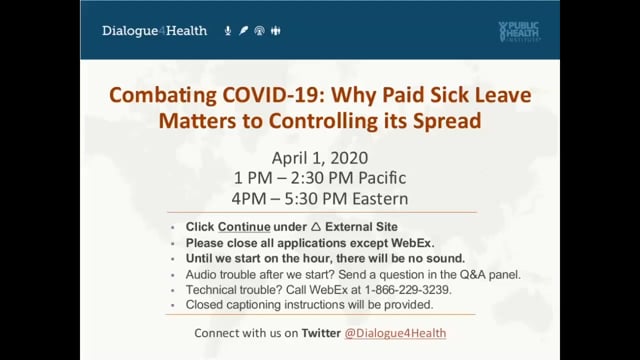
Combating COVID-19: Why Paid Sick Leave Matters to Controlling its Spread

This webinar highlights recommendations made in TFAH’s Ready or Not and Promoting Health and Cost Control in States (PHACCS) reports on the important role of paid sick leave in combating infectious diseases, as well as other complementary evidence-based policies that can be adopted by federal, state and local governments and by employers.

Presenters focused on pending federal legislation, states that have adopted laws regarding paid leave, and businesses that are expanding these benefits. In addition, they discussed the potential short-term uses of the recently approved supplemental budget to assist individuals without paid leave when confined to their homes.

Recommended for anyone working in public health, advocacy, school health, community-based organizations, businesses, labor unions, hospitals, health systems, insurers, policy staff, and local and state health officials.

Promoting Health & Cost Control in States: Exploring the Health and Economic Impacts

This is the first segment of a web forum series dedicated to highlighting state-level, evidence-based strategies across sectors to improve health. States can improve their residents’ health and well-being, and lower healthcare costs, by implementing a range of policies in sectors beyond healthcare. The Promoting Health and Cost Control in States (PHACCS) initiative focuses on 13 state-level policies that can be adopted and implemented to promote health and control cost growth.Please join this web forum hosted by Trust for America’s Health for a panel discussion with public health leaders as they highlight the current legal landscape of tobacco pricing strategies, the health impacts of tobacco pricing strategies, and how advocates are working at the local and state level to reduce tobacco use.

Every year, smoking-related illnesses cost the United States more than $300 billion, including approximately $170 billion in medical care. However, one of the most effective evidence-based strategies for state policymakers to consider reducing tobacco use is decreasing access to, and increasing the price, of tobacco products.The panelists will also discuss the latest research and public health efforts focused on tobacco control programs. The web forum session will include time for audience Q&A.This web forum is free for all participants. It is recommended for those working in public health, advocacy, education, community-based organizations, faith-based organizations, hospitals, health systems, insurers, and local and state health officials.

Additional Resources: