Preparedness for Public Health Emergencies at Risk Amid Federal Funding and Workforce Instability, New Report Finds

Ready or Not 2026 finds wide variation in state preparedness and warns that federal disruption could weaken emergency readiness nationwide

(Washington, DC – May 7, 2026) – Amid deep federal staffing cuts, grant terminations, and other far-reaching changes to the federal public health system, a new report from Trust for America’s Health (TFAH) finds wide variation in states’ readiness for disease outbreaks, natural disasters, and other health emergencies. The report warns that national preparedness depends not only on state capacity, but also on strong and stable federal health and preparedness systems, sustained intergovernmental coordination, and long-term investment in public health infrastructure.

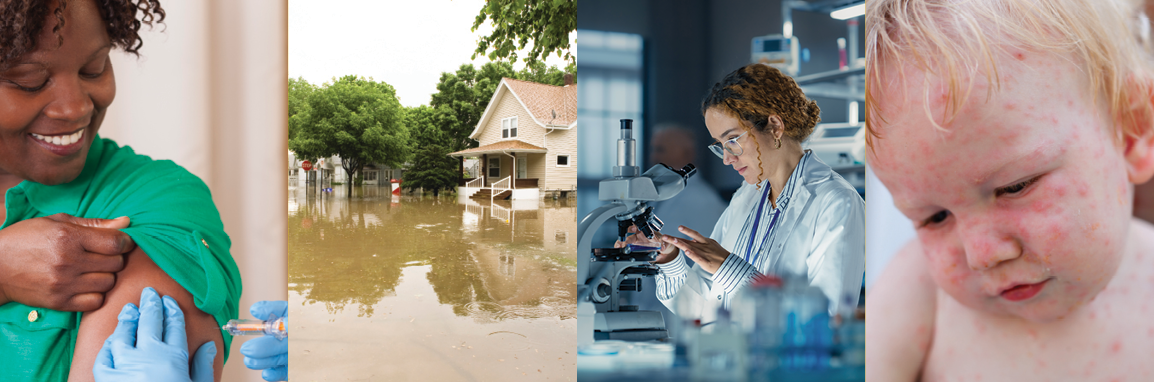
Ready or Not 2026: Protecting the Public’s Health from Diseases, Disasters, and Bioterrorism measures the nation’s readiness for public health emergencies through 10 indicators of state preparedness, including healthcare workforce mobility, state public health funding, laboratory surge planning, access to paid sick leave, and community water system safety. This year’s report also includes a special feature on how federal workforce reductions and funding instability could weaken preparedness nationwide.

“The nation faced the most severe flu season in nearly a decade, the highest annual measles case count since 1991, and devastating weather-related emergencies, even as federal public health funding, staffing, and operational support were destabilized,” said Dr. J. Nadine Gracia, President and CEO of TFAH. “These challenges make clear that emergency preparedness cannot rely on a patchwork of limited and unpredictable resources. Effective readiness requires strong federal leadership, stable investment, and coordinated action across states and communities, especially as the United States prepares to host matches during the 2026 World Cup.”

As TFAH marks its 25th anniversary, the report highlights how decades of federal investment, policy development, and programmatic progress helped build the preparedness systems now under strain. The report places states and the District of Columbia into three performance tiers for emergency preparedness: 20 states in the high-performance tier, 17 states and the District of Columbia in the middle-performance tier, and 13 states in the low-performance tier.

High-Performance Tier – 20 states

CA, CO, CT, DE, FL, IL, KS, MA, MD, ME, MT, NC, NH, NJ, PA, RI, UT, VA, VT, WI

Middle-Performance Tier – 17 states and the District of Columbia

AR, AZ, DC, GA, HI, ID, IN, LA, MO, ND, NE, NV, NY, OH, OR, SC, TN, WA

Low-Performance Tier – 13 states

AL, AK, IA, KY, MI, MN, MS, NM, OK, SD, TX, WV, WY

These benchmarks provide policymakers and health officials with a roadmap for strengthening emergency preparedness in their jurisdictions.

Other key findings from the report include:

Public Health Funding: Most states increased or maintained their public health funding in fiscal year 2025. At least 12 states reduced state public health funding.

Water Safety: On average, 6 percent of residents in each state were served by a community water system with at least one health-based violation, mainly concentrated in smaller, rural, and socioeconomically disadvantaged communities. A federal assessment also found critical or high-risk cybersecurity vulnerabilities in dozens of drinking water systems.

Seasonal Flu Vaccination: The percentage of U.S. residents who received a vaccination against influenza continued to decrease from pre-COVID-19 pandemic levels. The 2024-25 flu season saw the highest hospitalization rates since 2010–2011 and the most pediatric deaths in any non-pandemic season since reporting began in 2004.

Avoidable Mortality: Wide variation persists across states in deaths from preventable and treatable causes before age 75. Rates in the highest-burden states are more than twice those in the lowest. Racial and ethnic disparities compound these gaps in most states, and low overall rates do not necessarily indicate equitable outcomes.

Paid Sick Leave: Access to paid sick leave varies widely across U.S. regions—from 98 percent of workers in Pacific states to 67 percent in East South Central states—and gaps are most concentrated among low-wage, part-time, and service-sector workers. Paid sick leave reduces disease transmission, supports business continuity, and is increasingly recognized by employers as an important part of preparedness infrastructure.

Policy Recommendations for Improving Emergency Preparedness:

The report outlines steps the Administration, Congress and federal agencies should take to strengthen the nation’s health and economic security:

  • Provide stable, flexible, and sufficient funding for public health preparedness, workforce, and data modernization to help ensure every state has the systems needed to protect residents.
  • Restore the federal public health workforce and capabilities reduced in 2025.
  • Reauthorize the Pandemic and All-Hazards Preparedness Act.
  • Strengthen outbreak and pandemic readiness by supporting immunization, public health surveillance, and antimicrobial resistance efforts.
  • All levels of government should adopt strategies and accountability metrics to incorporate community resilience and health equity into preparedness.
  • Accelerate development, stockpiling, and distribution of vaccines, therapeutics, diagnostics, and other medical countermeasures.
  • Bolster healthcare system readiness, including cross-state credentialing and investment in Health Care Readiness programs.
  • Expand preparedness for extreme weather and environmental health threats.


Read the full report


Trust for America’s Health is a nonprofit, nonpartisan public health policy, research, and advocacy organization that promotes optimal health for every person and community and makes the prevention of illness and injury a national priority.



Age-Friendly Public Health: The Podcast

April 2026

In this episode of Age-Friendly Public Health: The Podcast, host J. Nadine Gracia, President and CEO of Trust for America’s Health is joined by Sara Lyons, Senior Program Analyst in the Division of Health and Disability at the National Association of County and City Health Officials (NACCHO). Together, they discuss how local public health departments are actively supporting older adult health through existing programs, as well NACCHO’s partnership with TFAH in the development of the AFPHS 6Cs Training and Implementation Guide and other initiatives.  

Transcript: Local Public Health Leading the Way for Healthy Aging 

Season Two Episode:

Season One Episodes:

You can listen on Apple Podcasts, Spotify or where ever you access your favorite podcast.

Age-Friendly Public Health: The Podcast is a production of Trust for America’s Health’s (TFAH) Age-Friendly Public Health Systems Initiative. This quarterly podcast, hosted by TFAH’s President and CEO Dr. J. Nadine Gracia, will feature conversations with leaders in the age-friendly public health systems movement on challenges, opportunities, and model programs, with a focus on the role public health can play in helping older adults thrive.


    •  
    •  

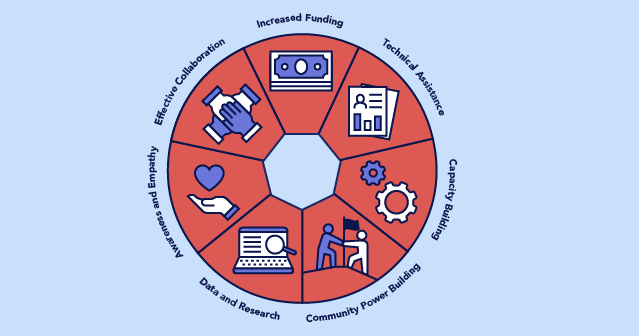
    Seven Strategies to Support State-level Health-Promoting Policies

    Reductions in federal and state funding, infrastructure, and workforce have reduced capacity for states to support communities’ health and wellbeing. With less federal support, states and localities will play an even more critical role in advancing health promoting policy.

    However, state leaders and advocates face an increasingly complex policy environment to advance community health in the current landscape. As part of TFAH’s Promoting Health and Cost Control in States (PHACCS) initiative, we asked policy advocates and government staff from around the U.S. how national organizations and other non-federal partners can support efforts to advance policies and programs that can promote health and reduce healthcare spending.

    The following summarizes those individuals’ responses, framed as opportunities for national-level partners to deepen their state engagement toward policy change.

    Support Area 1: Increase funding for organizations, especially flexible use of funds.

    Lack of flexible funding at federal, state, and local levels slows efforts to advance policy goals and address community needs. With federal funding in flux, support from philanthropic funders at community, state and national levels, as well as other national partners, can help address some of the funding gaps faced by community organizations.

    National-level partners can:

    • Provide seed funds to jumpstart implementation efforts.
    • Educate grantees about how to maximize philanthropic funds for advocacy.
    • Support flexible funding mechanisms for advocacy organizations to address their structural needs.
    • Set realistic expectations for funding support through manageable timelines and goals.
    • Allow for greater flexibility in how funds can be used so that organizations can address needs specific to their community.

    Support Area 2: Provide targeted technical assistance to organizations with a specific need or problem.

    Even as national-level partners face their own challenges, they can also help those at the local level meet the moment, especially as local resources and staff time are more constrained. Partners can invest in people and communities who can do the work effectively.

    National-level partners can:

    • Help organizations navigate the grant proposal process and identify relevant funding opportunities.
    • Assist resource-strained organizations with developing funding proposals.
    • Modify reporting requirements so that organizations can satisfy grant requirements and increase their chances for continued funding.
    • Provide policy support and advice, especially in a fast-changing policy environment.
    • Provide support for organizations to evaluate their work to demonstrate impact.

    Support Area 3: Encourage capacity building that allows advocates to invest in people and communities who can do the work effectively.

    Capacity building should inform community strategies to train and build skills for organizations to meet needs on their own and increase operational, programmatic, financial, or organizational capacity to advance their goals.  National-level partners can:

    • Ensure there is authentic power sharing between national and state/local advocacy groups or governments.
    • Build governance expertise by helping state/local advocacy groups or governments understand their legal authorities and identify legal and policy tools to promote health.
    • Help build coalitions and networking opportunities to enhance cross-sector collaboration and strengthen relationships.
    • Provide resources that share best practices and evidence-based strategies to promote health.
    • Offer advocacy skills, strategies, and tools to help state policy efforts gain bipartisan support.

    Support Area 4: Invest in community power building that encourages deeper synergy between community, state/local government, and national partners. 

    Partnering with states to advance policy strategies can ensure there is a deeper throughline with community, state/local government, and national partners. National-level partners can:

    • Develop tools to guide community power building by centering community needs.
    • Incorporate community engagement efforts into funding.
    • Help build political electoral power at state levels to harness and leverage community power to advance local, community-driven policy solutions.
    • Help disengaged community members see systemic issues as solvable.
    • Reframe wins and losses as steps for a long-term agenda to avoid burnout and create a culture of well-being.

    Support Area 5: Ensure better access to and use of data and research, especially to inform stories for both decisionmakers and residents.

    Even with greater mistrust in data, science, and evidence, national partners should continue supporting advocates in accessing readily available and easily interpretable data and research to build a case for evidence-based policy. National-level partners can:

    • Improve the data and evidence base, considering how data is collected and shared back with communities.
    • Ensure accountability for data sovereignty for Tribal nations and state relationships.
    • Use local research and local examples of successful policy adoption and implementation to demonstrate the possibilities and benefits of pursuing a health-promoting policy.
    • Provide support to ensure that quantitative data is paired with lived experience narratives to provide context for advocacy.

    Support Area 6: Exercise empathy and awareness about the challenges faced by states and localities. 

    States and localities can feel isolated and misunderstood, especially as they face unique challenges amid evolving political and funding environments. To ensure states and localities feel heard and understood, national-level partners can:

    • Recognize and acknowledge unique state and local challenges.
    • Allow flexibility in reporting requirements and language, especially as some entities may be less able to pursue explicitly equity-focused efforts.
    • Help partners build an advocacy case by sharing successful efforts and lessons learned by similar states or localities.
    • Recognize the need to balance national and state and local expertise, knowing when to share leadership responsibilities in leading local efforts to advance policy.

    Support Area 7: Maintain and nurture effective collaboration with partners to advance policy.

    National-level organizations are uniquely positioned to help state entities identify partners to advance policy. Specifically, national groups can help build opportunities for brainstorming, collaboration and peer learning. To support collaboration, national-level partners can:

    • Create spaces for state and local leaders to share and amplify their stories.
    • Ensure authentic partnerships that offer equitable support for community partners.
    • Use their convening power and knowledge of the field to identify a unifying goal and vision for the future.
    • Provide resources for organizations and government partners to collaborate with others in similar states, political environments, and regions.

    TFAH’s Statement on the Impact of the Loss of CDC Grants

    (Washington, DC – February 11, 2026) — TFAH is deeply alarmed at the most recent cancellation of hundreds of millions of dollars in CDC grants to states and communities.  These funds support the core public health infrastructure that keeps Americans safe, including early detection of outbreaks, preventing injuries and HIV, reducing health disparities, strengthening the public health workforce, and modernizing outdated data systems.

    These abrupt cuts undermine the ability of health departments, clinics, researchers, and community-based organizations to protect lives and respond to health threats.

    Protecting the health and well-being of all Americans requires sustained, predictable investment, not sudden reversals that leave communities vulnerable.  We urge HHS to reverse these cancellations and restore these life-saving programs.

    Public Health Leaders’ Joint Statement in Response to Announced Changes to U.S. Childhood Vaccine Schedule

    (Washington, DC – January 5, 2026) — Together, the National Association of County and City Health Officials (NACCHO), Trust for America’s Health (TFAH), and the Big Cities Health Coalition (BCHC) issued the following statement in response to today’s announcement by the U.S. Department of Health & Human Services (HHS) of significant changes to the U.S. childhood vaccination schedule:

    Our nation’s vaccine schedule has been built upon extensive scientific evidence and continuous safety monitoring to best protect children as they grow. It has been deliberated and studied to ensure safety while protecting our nation’s children from diseases that can significantly harm their health and wellbeing. For decades, each change to the schedule was discussed openly by experts, with both benefits and risks considered. However, today’s announcement places increased burden on parents and health providers to navigate an increasingly complex system and assure access to these life-saving products.

    Immunizations are the most effective defense we have against a host of deadly and painful illnesses. Ensuring all children receive the vaccines they need on time stops diseases from spreading in the community and ensures healthy childhood development. We see the positive impact each day, as diseases once commonplace are now rare, and kids are in school instead of being home sick or hospitalized due to preventable illness. Creating new barriers to immunizations, as today’s announcement does, will make it harder for children to have the opportunity to grow up healthy and strong.

    ###

    Trust for America’s Health
    Trust for America’s Health is a nonprofit, nonpartisan public health research, policy, and advocacy organization that promotes optimal health for every person and community and makes the prevention of illness and injury a national priority.
    About NACCHO
    The National Association of County and City Health Officials (NACCHO) represents the over 3,300 local governmental health departments across the country. These city, county, metropolitan, district, and tribal departments work every day to protect and promote health and well-being for all people in their communities. For more information, visit www.naccho.org.

    About the Big Cities Health Coalition
    The Big Cities Health Coalition (BCHC) is a forum for the leaders of America’s largest metropolitan health departments to exchange strategies and jointly address issues to promote and protect the health and safety of their residents. Collectively, BCHC member jurisdictions directly impact more than 61 million people, or one in five Americans. www.bigcitieshealth.org


    New Report Examines State Policies that Support Good Health and Analyzes the Legislative Landscape for their Implementation

    Federal cuts to health promoting programs will require that states and community partners innovate and work across sectors to protect and advance residents’ health


    (Washington, DC – December 17, 2025) – Federal actions that cut funding and lead to program eliminations throughout government will slow the implementation of state-level policies that promote health, concludes a new report, Advancing Policies that Create Conditions for Good Health: Opportunities, Barriers, and Strengths, released today by Trust for America’s Health (TFAH). These program changes will create gaps that states and cross-sector partnerships could help address through support for collaboration and innovation.

    The report is the newest in TFAH’s Promoting Health and Cost Control in States (PHACCS) report series highlighting evidence-based policies and programs states can pursue to improve residents’ health and reduce healthcare spending. Population-level health is influenced by a variety of social and economic factors, such as housing access, food affordability, the built environment, and workplace policies. The PHACCS Initiative, launched in 2018, identifies evidence-based policies that states can implement to promote residents’ health and create economic return on investment.

    This new report considers these policies in the current legislative landscape, based on input from advocates, service providers, and government staff across different jurisdictions and policy areas. It analyzes how the changed legislative environment is impeding policy action and what new innovations and cross-sector collaborations are needed to create or protect policy momentum.

    “The nation’s public health infrastructure has been changed in consequential ways that will impact states and communities across the country. These changes, including funding cuts and the elimination of effective programs, risk reversing progress in improving Americans’ health,” said J. Nadine Gracia, M.D. MSCE, President and CEO of Trust for America’s Health. “In order to fill some of these gaps, state-based organizations and policymakers are developing strategies to support health promoting policies, particularly in communities with the greatest need.”

    The report is organized into three sections which encourage states and cross-sector partners to continue their work promoting good health in every community by sharing information, evidence, and innovative strategies.

    “Leaders within policy areas supported by the PHACCS initiative continue to leverage strategies that help advance policies in ways that uniquely fit their states despite fiscal constraints created by the current budget environment,” said Breanca Merritt, Ph.D., Director of Policy at Trust for America’s Health. “This report identified recent progress and policy wins using these approaches, including bipartisan and community-driven efforts within multiple states.”

    The first section, Creating Conditions for Good Health: A Changing Policy Environment, outlines federal policies that have supported states in advancing health promoting programs, as well as recent federal policy decisions and state actions that limit states’ ability to do so.

    The second section, Creating Conditions for Good Health: What’s Working for States, summarizes input from advocacy organizations and government partners collected during national and regional level convenings. During the convenings, participants discussed effective strategies for advancing health promoting policies in states as well as barriers to their implementation.

    The last section of the report, Creating Conditions for Good Health: Progress and Highlights of PHACCS Policies reviews trends in state-level adoption within policy areas highlighted by PHACCS, including:

    • Universal pre-kindergarten programs
    • School nutrition programs
    • Drug overdose and infectious disease prevention strategies, including harm reduction
    • Smoke-free policies
    • Tobacco and alcohol pricing strategies
    • Complete Streets policies
    • Housing rehabilitation and rapid re-housing programs
    • Earned Income Tax Credit
    • Earned employee sick leave
    • Paid family leave
    • Fair hiring practices

    These policies have shown strong or emerging evidence for their ability to improve health and can offer return on investment for states that implement them. In the coming years, states and their community partners should strive to collaborate even more closely to support their implementation.


    Statement from J. Nadine Gracia, M.D., MSCE, President and CEO of Trust for America’s Health on Changes to CDC Webpage on Vaccines and Autism:

    (Washington, DC – November 20, 2025) – “The Centers for Disease Control and Prevention’s website has been changed to promote harmful, false claims about vaccines and autism. The science is clear: vaccines do not cause autism. Using a federal platform to promote disproven claims is a violation of public trust that jeopardizes vaccine confidence, undermines prevention efforts, and puts communities at risk of vaccine-preventable outbreaks. These myths contribute to needless illness and suffering.

    Parents, patients, healthcare providers, and public health practitioners depend on CDC as a trustworthy source of verified, accurate scientific information.  Trust for America’s Health calls upon the CDC to restore the previous, science-driven vaccine webpages.”