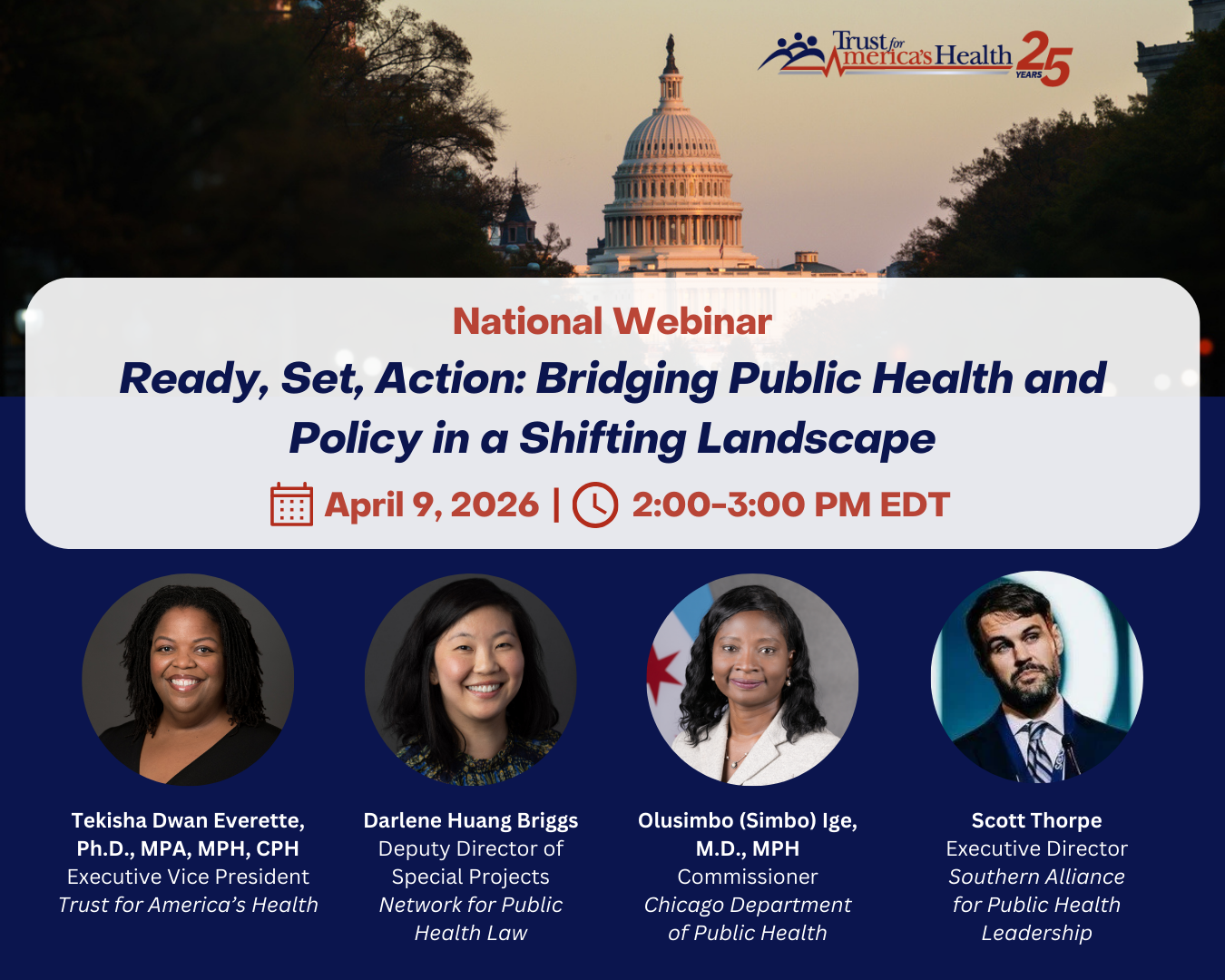
Ready, Set, Action: Bridging Public Health and Policy in a Shifting Landscape

Join Trust for America’s Health (TFAH) for a national webinar in recognition of National Public Health Week 2026. This year’s theme is Ready. Set. Action!, a call to reflect on the progress public health has made and next steps needed to build a healthier future.

Good health does not happen in a vacuum. It’s shaped by sustained investments, strong federal leadership, and effective partnerships across state and local communities. For 25 years, TFAH has stood at the center of the nation’s most critical public health milestones, championing initiatives like the Prevention and Public Health Fund to secure sustainable resources. However, following a year of significant challenges and a Fiscal Year 2026 budget that deviates from expectations, the question remains: how are federal, state, and local programs adapting to move forward?

Join us as we discuss how public health systems are navigating this evolving landscape, examining the status of key federal agencies and the broader network of public health programs. Speakers will reflect on lessons learned, emerging threats and opportunities, and strategies to sustain momentum in a changing fiscal and policy environment. The webinar will include time for Q&A from the audience.
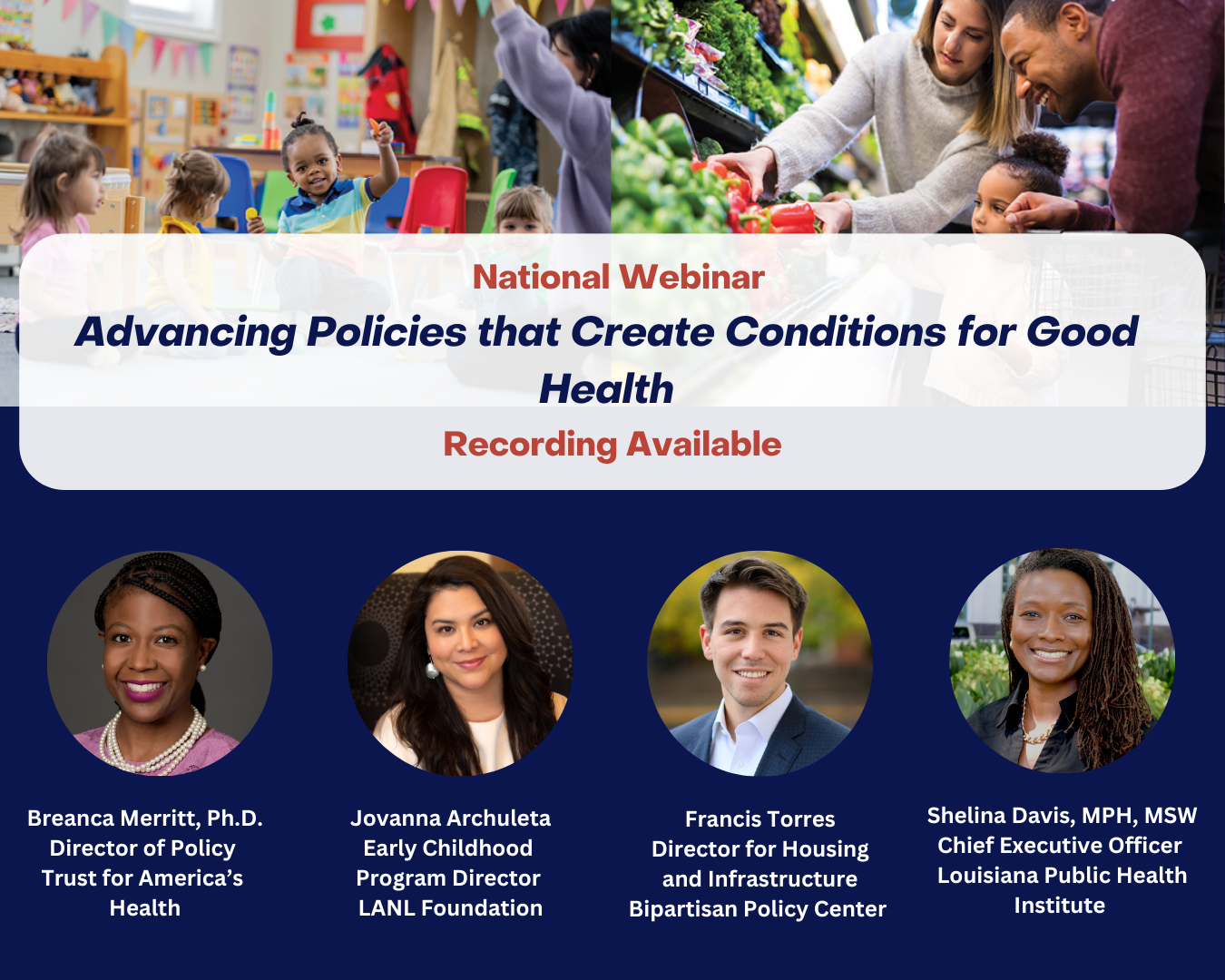
Advancing Policies that Create Conditions for Good Health

Trust for America’s health hosted a national webinar on the recently released report,  Advancing Policies that Create Conditions for Good Health: Opportunities, Barriers, and Strategies, a report of TFAH’s Promoting Health and Cost Control in States (PHACCS) initiative.

How can we advance the public’s health in an era of diminished federal and state public health infrastructure and funding? The report shares strategies and trends about how states are addressing policies beyond traditional public health infrastructure that promote residents’ health and create return on investment. The webinar highlighted perspectives from national, government, and advocacy partners about the federal and state implications of policies that can help improve community health. As the current policy environment shifts responsibility to address non-medical drivers of health from federal to state governments, states will need to embrace new strategies, collaborate across sectors, and act creatively to continue advancing policies that support residents’ health.

We discussed how states have and can continue to advance health promoting policies in a variety of policy environments, ensuring that improvements are experienced in all communities amid a weakened public health infrastructure.