2024 Year in Review and Looking Ahead to 2025

During 2024, Trust for America’s Health (TFAH) continued its work to create a more resilient, trusted, and equitable public health system, and a healthier nation.

TFAH continued its work in a number of critical issue areas to improve the nation’s health, including emergency preparedness, public health funding, chronic disease prevention, the role of food and nutrition policy in stemming the nation’s obesity crisis, preventing substance misuse and suicide, supporting healthy aging, and addressing the health impacts of climate change and other environmental health risks.

Progress and Risks

The nation’s public health system is at an inflection point; progress has been made in many areas but there are also continuing and potential new risks to the nation’s health. The following are examples of areas of progress and areas of risk.

Areas of progress:

  • Drug overdose deaths, including from fentanyl, are down. The reduction can be credited in part to the increased availability of treatment options and the adoption of harm reduction strategies such as readily available naloxone, the overdose reversal drug, in many communities. However, disparities persist, with overdose rates increasing in many Black and Native American communities.
  • COVID-19 infection rates are currently low across the country, a testament to what can be achieved when the public health community rallies and has the funding and resources necessary to meet an immediate challenge.
  • Investments in public health data modernization, wastewater surveillance, and the Centers for Disease Control and Prevention’s (CDC) Center for Forecasting and Outbreak Analytics have improved the nation’s ability to identify and track emerging health threats. The Center has awarded more than $100 million to partners who are technologically advancing the use of outbreak data to control infectious disease spread.
  • Fifty-nine state and local health departments have earned Age-Friendly Public Health Systems Recognition Status through TFAH’s Age-Friendly Public Health Systems initiative by making healthy aging a core function of the department. In addition, four public health organizations and 154 individual public health practitioners have been recognized as public health champions.
  • Fifteen states and D.C. have adopted paid sick leave laws which require private employers to provide paid sick leave to employees attending to their own or a family member’s health. Alaska, Missouri, and Nebraska will require employers to provide paid sick leave beginning in 2025. Paid sick leave has been a long-standing TFAH policy recommendation.

Areas of risk:

  • Public health faces a serious funding cliff as monies infused into the public health system as part of the pandemic response are expiring or in some cases rescinded. The loss of such funding returns the public health system to the state of underfunding it experienced for decades prior to the global pandemic. TFAH’s annual report, The Impact of Chronic Underfunding on America’s Public Health System 2024: Trends, Risks, and Recommendations called attention to the critical need to increase investment in public health on a sustained basis.
  • The COVID-19 pandemic exposed serious gaps in the nation’s emergency infrastructure that have not been fully addressed. Furthermore, misinformation about the pandemic, particularly about lifesaving COVID-19 vaccines, contributed to an uptick in mistrust of public health officials that could lead to more vaccine hesitancy and challenges to important public health authorities, all of which could make containing future disease outbreaks more difficult.
  • New disease outbreaks such as the H5N1 Bird Flu could grow.
  • Rates of recommended childhood vaccinations are down.
  • Health disparities continue to impact the nation. Rates of chronic disease are on the rise in every community but are higher, for example, among many communities of color and in rural communities, due to structural barriers to health like access to healthy and affordable food, secure housing, and opportunities for physical activity in those communities.
  • Health risks are also increasing due to an increase in the number and severity of weather-related incidents including extended periods of extreme heat and extreme heat in regions of the country unaccustomed to such weather.

Working With Partners and Providing Leadership to Strengthen the Nation’s Public Health Ecosystem

TFAH released its Pathway to a Healthier America: A Blueprint for Strengthening Public Health for the Next Administration and Congress in October, after consultation with more than 45 experts, practitioners, organizations, and community members. The Blueprint provides the incoming Administration and Congress a policy roadmap for improving the nation’s health, economy, and national security within six priority areas: 1) invest in public health infrastructure and workforce, 2) strengthen prevention, readiness, and response to health security threats, 3) promote the health and well-being of individuals, families, and communities across the lifespan, 4) advance health equity by addressing structural discrimination, 5) address the non-medical drivers of health to improve the nation’s health outcomes, and 6) enhance and protect the scientific integrity, effectiveness, and accountability of agencies charged with protecting the health of all Americans.

Working with partners across multiple sectors is central to TFAH’s work. TFAH staff led or participated in a number of coalitions during 2024, including the Coalition for Health Funding, the CDC Coalition, the Common Health Coalition, the Well-Being Working Group, the Injury and Violence Prevention Network, National Alliance for Nutrition and Activity, the Coalition to Stop Flu, the Adult Vaccine Access Coalition, the Age-Friendly Ecosystem Collaborative, the National Alliance to Impact the Social Determinants of Health, the National Commission on Climate and Workforce Health, and the National Council on Environmental Health & Equity.

Advocating for Evidence-Based Solutions

A healthy community supports the health of individuals and families by creating access to non-medical drivers of health such as secure housing, transportation, quality healthcare, high-quality childcare and educational opportunities, and jobs that pay a living wage. Such health security supports individuals, families, communities, and the nation’s economy.

Throughout the year, TFAH convened partners to strategize ways to effectively advance health promoting policies and programs at the federal and state levels. In addition, TFAH staff worked with numerous federal agencies and offices, like CDC, FDA, and SAMHSA, as well as public health organizations such as the Association of State and Territorial Health Officials (ASTHO), the National Association of County and City Health Officials (NACCHO), Big Cities Health Coalition, and the National Governors Association to advance policies and garner support for programs that will improve Americans’ health. Among TFAH’s legislative goals for 2024 and moving into 2025 are increased and sustained investment in public health agencies, infrastructure, and programs; passage of a new Farm bill that provides access to nutrition support programs; reauthorization of the Pandemic and All Hazards Preparedness Act and the Older Americans Act; and passage of the Public Health Infrastructure Saves Lives Act and the Social Determinants of Health Act.

These advocacy efforts earned numerous policy wins, including the U.S. Department of Agriculture’s (USDA) updates to school meals formulas and the Special Supplemental Nutrition Program for Women, Infants, and Children (WIC) benefit food packages that aligns with TFAH recommendations.

TFAH’s core annual reports, which track data and recommend policy solutions in the areas of emergency preparedness, public health funding, preventing substance misuse and suicide, and addressing the nation’s obesity crisis, continue to be a critical source for data trends and evidence-based policy and program solutions for health officials, policymakers, other decision-makers, and advocates across the country.

Making Healthy Aging a Core Function of Local Health Departments

Through its Age-Friendly Public Health Systems Initiative (AFPHS), TFAH continues to provide guidance and resources to state and local health departments to help them promote healthy aging in their communities. During 2024, AFPHS co-hosted the 2024 National Healthy Aging Symposium with the U.S. Department of Health and Human Services’ (HHS) Office of Disease Prevention and Health Promotion. The symposium brought together speakers from sectors across all levels of government, philanthropy, academia, nonprofits, community-based organizations, tribal representatives, and others who shared their perspectives on important topics related to healthy aging including caregiving, brain health, the caregiving workforce, transportation, housing, and social engagement. TFAH also launched the Age-Friendly Ecosystem Collaborative to continuously engage organizations and sectors central to healthy aging.

Supporting Public Health Communicators

TFAH continues to be a managing partner of the Public Health Communications Collaborative (PHCC). PHCC provides no-cost messaging resources and communications training to state and local health departments to help the field effectively address the public’s information needs on public health issues. The Collaborative was first established during the COVID-19 pandemic and now works across the public health sector on such issues as H5N1 Bird Flu, Mpox, protecting health during periods of extreme heat, and vaccine confidence. Its training materials include resources on strengthening public health through community engagement, responding to misinformation, and using social media in health communications. The PHCC newsletter is shared with over 38,000 opted-in subscribers, and its website has earned over 1.2 million page views since its launch in 2020.

Looking Ahead

The 2025 calendar year promises to be pivotal for the nation’s health. TFAH looks forward to bringing evidence-based policy recommendations to the new Administration and Congress, particularly on issues such as emergency preparedness, chronic disease prevention, mental health, veterans’ and rural health, and investing in prevention to reverse the pattern of increasing healthcare spending without better health outcomes. We are committed to making the case for policies and programs that address the non-medical drivers of health in order to promote the nation’s health and economic security.
National Immunization Month Highlights Lifesaving Benefits of Vaccines

August 2024

National Immunization Awareness Month sponsored by the National Public Health Information Coalition (NPHIC) and observed every August, highlights the lifesaving benefits of vaccines. During the month, activities will raise awareness of the importance of vaccinating people of all ages against serious and sometimes deadly diseases. The awareness month also celebrates the successes of immunizations and educates Americans about vaccine safety and effectiveness.

According to a study by the Commonwealth Fund, from December 2020 through November 2022, COVID-19 vaccines prevented approximately 18.5 million hospitalizations and 3.2 million deaths in the U.S., but the lifesaving impact of vaccines extends far beyond COVID-19. Vaccines have dramatically reduced the spread of diseases like measles, polio, and whooping cough, protecting countless individuals and communities.

According to new data published this month by the CDC, among children born during 1994-2023, routine childhood vaccinations will have prevented about 508 million cases of illness, 32 million hospitalizations, and 1,129,000 deaths over the course of their lifetimes.

Unfortunately, numerous factors have led to a decline in vaccination rates in recent years including healthcare disruptions during the COVID-19 pandemic and the spread of misinformation about vaccine safety and effectiveness. In some cases, this has resulted in outbreaks of once-controlled diseases, including measles and to a lesser degree polio, jeopardizing the progress we have made.

According to the American Association of Immunologists, getting vaccinated protects against the spread of infectious diseases by helping our immune systems fight infection. Vaccines work by introducing a weakened or inactive form of a virus or bacteria to the body. This triggers the immune system to develop antibodies, creating a kind of shield against future infection. When a large portion of the population is vaccinated, it creates “herd” or community-level immunity, making it difficult for diseases to spread, even protecting those who haven’t been vaccinated themselves.

The public health benefits of vaccines include:

Disease Prevention: Vaccines are highly effective at preventing serious illnesses like measles, mumps, rubella, polio, diphtheria, tetanus, whooping cough, chickenpox, shingles, influenza, and pneumonia. These diseases can cause severe complications, hospitalization, and even death.

Reduced Healthcare Costs: Vaccines are a cost-effective way to prevent illness and its associated medical expenses. Vaccination programs save billions of dollars in healthcare costs each year.

Protection for Populations at Higher Risk: Vaccines are especially important for protecting those with developing immune systems (infants) or weakened immune systems, such as older adults and people with certain chronic illnesses.

Global Health Impact: Vaccination programs have had a significant impact on global health. They have helped to virtually eliminate smallpox and dramatically reduced the burden of other diseases worldwide.

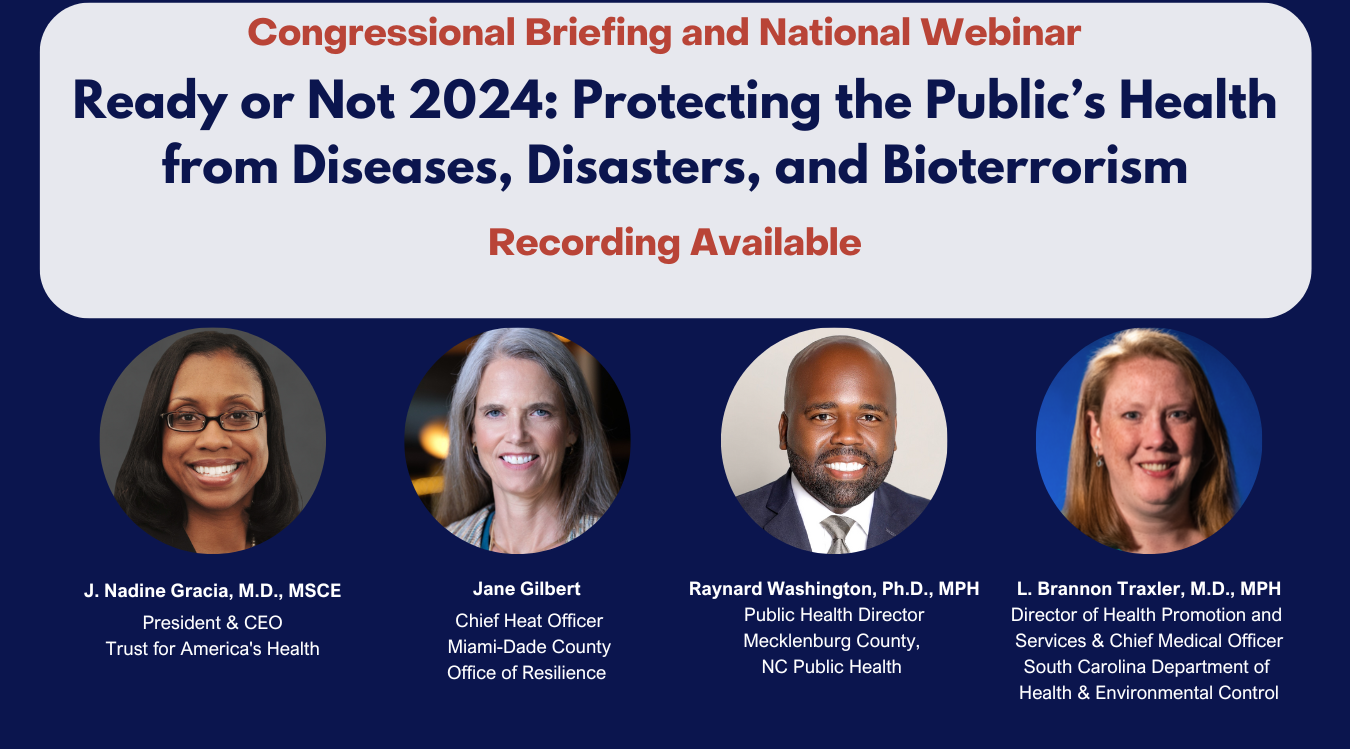
To build on and sustain the health benefits of vaccines, TFAH’s 2024 Ready or Not: Protecting the Public’s Health from Diseases, Disasters, and Bioterrorism report includes a number of important recommended policy actions to strengthen the nation’s vaccine infrastructure:

  • Increased Funding: Congress should provide at least $1.1 billion per year to support vaccine infrastructure and delivery, including programs promoting equitable vaccine distribution.
  • Insurance Coverage: Congress and states should ensure first-dollar coverage for recommended vaccines under commercial insurance and for uninsured populations.
  • Minimizing Exemptions: States should minimize vaccine exemptions for schoolchildren, and healthcare facilities should increase vaccination rates of healthcare workers.
  • New Vaccine Development: Congress should create incentives for new-product discovery to prevent and fight resistant infections including therapeutics, diagnostics, and prevention products such as vaccines.
  • Strengthening Influenza Defenses: Congress should strengthen the pipeline of influenza vaccines, diagnostics, and therapeutics.
  • Countering Vaccine Misinformation:The spread of misinformation about vaccines can lead to vaccine hesitancy and lower vaccination rates. TFAH calls for promoting accurate information from trusted sources to increase vaccine confidence.

According to research published in The Lancet, since 1974, vaccination has prevented 154 million deaths worldwide. By ensuring equitable access to vaccines, promoting accurate information, and investing in research and education, we can continue to harness the power of vaccines and build a healthier future for all.


Ready or Not 2024: Protecting the Public’s Health from Diseases, Disasters, and Bioterrorism

The Ready or Not 2024: Protecting the Public’s Health from Diseases, Disasters, and Bioterrorism report identifies gaps in national and state preparedness to protect residents’ health during emergencies and makes recommendations to strengthen the nation’s public health system and improve emergency readiness. As the nation experiences an increasing number of infectious disease outbreaks and extreme weather events, the report found that while emergency preparedness has improved in some areas, policymakers not heeding the lessons of past emergencies, funding cuts, and health misinformation put decades of progress at risk.


Resource:

Ready or Not 2024: State-by-State Factsheets

New Report Measures States’ Emergency Preparedness and Recommends Policy Actions to Strengthen the Nation’s Public Health System and Emergency Preparedness

Special Section Examines Health Impacts of Extreme Heat and the Disproportionate Risks for Certain Population Groups

(Washington, DC – March 14, 2024) – Ready or Not 2024: Protecting the Public’s Health from Diseases, Disasters, and Bioterrorism, released today by Trust for America’s Health, identifies key gaps in national and state preparedness to protect residents’ health during emergencies and makes recommendations to strengthen the nation’s public health system and improve emergency readiness.

As the nation experiences an increasing number of infectious disease outbreaks and extreme weather events, the report found that while emergency preparedness has improved in some areas, policymakers not heeding the lessons of past emergencies, funding cuts, and health misinformation are putting decades of progress in public health preparedness at risk.

Based on nine indicators, the report tiers states, and the District of Columbia, into three readiness levels: high, middle, and low. This year’s report placed 21 states and DC in the high-performance tier, 13 states in the middle-performance tier, and 16 states in the low-performance tier.

High Tier21 states & DC

AL, AZ, CO, CT, DC, FL, GA, KS, MA, ME, MS, NC, NE, NJ, OH, PA, RI, SC, TN, VA, VT, WA

Middle Tier13 states

AR, DE, IA, ID, IL, MD, MO, MT, NH, NM, OK, UT, WI

Low Tier16 states

AK, CA, HI, IN, KY, LA, MI, MN, ND, NV, NY, OR, SD, TX, WV, WY

The report is designed to give policymakers actionable data and benchmarks to improve their jurisdiction’s readiness through new and sustained investment in public health infrastructure, modern data systems, a larger and more diverse public health workforce, and collaboration between public health and healthcare systems, and both systems’ ability to surge capacity in response to emergencies. Additional areas of responsibility for the public health system are enhancing vaccine access and monitoring municipal water systems safety.

“This report underscores the need for comprehensive investment in public health infrastructure and preparedness and highlights the importance of addressing the disproportionate effects of underinvestment in public health on communities of color and other groups that have been underserved or marginalized,” said Dr. J. Nadine Gracia, President and CEO of Trust for America’s Health. “Recent public health emergencies, from wildfires to infectious disease outbreaks, not only reveal the imperative for a modernized public health system they also highlight the intrinsic link between the overall health of a community and its ability to be resilient during an emergency. Focusing on eliminating health disparities, advancing health equity, and stemming the rise in chronic diseases is essential for enhancing the nation’s emergency preparedness.”

The report’s special section discusses the increasing health risks from extreme heat, including for particular population groups: people who live in under-resourced communities, people living in urban heat islands or without air conditioning, people who work outdoors, people with chronic diseases, pregnant individuals, infants, children, and older adults. In 2022, more people died in the U.S. due to extreme heat than from any other single type of weather event.

The report’s findings showed both areas of strength in the nation’s health emergency preparedness and areas that need attention.

Areas of strong performance include:

  • A majority of states have made preparations to expand healthcare and public health laboratory capacity in an emergency. As of the end of 2023, 39 states participate in the Nurse Licensure Compact, which helps facilitate emergency response efforts by allowing nurses to work in multiple member states, both in person and via telehealth, without the need for additional state licenses. Additionally, 46 states and the District of Columbia have written plans for the expansion of public health laboratory services during health emergencies.
  • Most states (43) and the District of Columbia are accredited in the areas of public health or emergency management, with many accredited in both.
  • A majority of states (at least 37) and the District of Columbia either maintained or increased their public health funding during fiscal year 2023. State investment in public health is particularly important because most federal funding in response to the COVID-19 pandemic was temporary, one-time funding.

Areas that need attention include:

  • Too few people are vaccinated against seasonal flu. During the 2022-2023 flu season, only 49 percent of the population (ages 6 months and older) was vaccinated against the flu, well short of the 70 percent goal established by Healthy People 2030. There is concern among public health experts that misinformation about the COVID-19 vaccine could be impacting the uptake of other vaccines.
  • On average, only 25 percent of acute care hospitals in states earned a top-quality patient safety grade in fall 2023. Hospital safety scores measure performance on issues such as healthcare-associated infection rates, intensive-care capacity, and an overall culture of error prevention – all critical for performing at their best during health emergencies.
  • On average, only 55 percent of U.S. workers used paid time off during the period from March 2018 to March 2023. Access to paid time off is an important readiness measure because workers who go to work sick risk spreading infections in the workforce and throughout the community.

Policy action is needed:

The report contains recommendations for policy actions across both public and private sectors that would create stronger public health preparedness, including:

  • Congress should enhance and modernize public health infrastructure by investing $4.5 billion per year to support foundational public health capabilities at the federal, state, tribal, local, and territorial levels, including investments in data systems and the public health workforce.
  • Congress should empower CDC to collect public health data in a timely and coordinated manner, and the U.S. Department of Health and Human Services (HHS) and all jurisdictions should ensure timely, complete, and disaggregated data collection and reporting. Together, these will enable faster and more effective detection and response to health emergencies.
  • Policymakers should prioritize rebuilding trust in public health agencies and leaders. Public health policy decisions should always be based on the best available science and free from political considerations, and federal agencies should be equipped to provide timely and clear public health guidance.
  • Congress should provide at least $1.1 billion per year to support vaccine infrastructure and equitable delivery of vaccines. States should minimize vaccine exemptions for schoolchildren, and healthcare facilities should increase vaccination rates among healthcare workers.
  • Congress should significantly increase investments in public health initiatives to prevent, detect, and contain antimicrobial resistance.
  • Congress and states should provide job-protected paid leave to contain the spread of outbreaks and protect health.
  • Congress should provide significant funding for medical countermeasures and should work with the private sector to plan for their distribution and dispensing when needed.
  • Congress, HHS, and healthcare leaders should strengthen healthcare readiness and recovery, and state and local emergency planners should work with the healthcare sector to integrate healthcare delivery into emergency preparedness and response.
  • Congress should increase investments in programs that identify and mitigate the health impacts of climate change, environmental hazards, and extreme weather.

Read the report

Trust for America’s Health is a nonprofit, nonpartisan public health policy, research, and advocacy organization that promotes optimal health for every person and community and makes the prevention of illness and injury a national priority.


August is National Immunization Awareness Month

August is National Immunization Awareness Month. This annual observance is designed to remind everyone that staying up to date on vaccinations is an important way to protect not only their health but the health of everyone around them.

Vaccines are a public health success story. Today, we are fortunate to have a broad spectrum of safe and effective vaccines, which if received on schedule, protect patients of all ages against vaccine-preventable diseases. Current vaccines protect against childhood disease including chicken pox, measles, and whooping cough, while protecting adults from the flu, Tdap, and shingles. Vaccines have also eradicated or nearly eradicated life-threatening diseases, such as smallpox and polio.

Children as young as 1-2 months old should be vaccinated against childhood illnesses and school-age children may need vaccine updates before they can return to school this fall. Ensuring that every child sees their doctor for a well-child visit and to receive any needed vaccine or vaccine updates is one of the best ways a parent can protect their child’s health and that of the community. Because the immunity created by a vaccine can lessen overtime, it’s important that children receive their vaccines on the recommended schedule. Adults may also need vaccine updates or to receive recently approved vaccines such as the RSV vaccine for adults 60 years of age and older.

During the COVID-19 pandemic, routine childhood vaccination levels among school-age children in the U.S. decreased, likely due to missed well-child medical visits. Globally, a report by UNICEF and the World Health Organization found that childhood vaccination coverage worldwide increased with about 4 million more children receiving full immunizations in 2022 compared to 2021, but were still below pre-pandemic levels.

Vaccines meet strict safety and effectiveness measures
In the U.S., safety measures are strict and prioritized to ensure that vaccines are safe for patients. Before any vaccine is approved for use, it is tested for safety and effectiveness through clinical trials and then must be approved by the Food and Drug Administration (FDA) and recommended by the Center for Disease Control and Prevention’s (CDC) Advisory Committee on Immunization Practices. While some people experience mild side effects after receiving a vaccine, such as swelling at the shot area, mild fevers and chills, serious reactions are extremely rare. Overall, the safety of all vaccines is closely monitored to ensure their continued safe use. If patients have questions about a vaccine including any potential side effects, they should speak to their healthcare provider.

Visit the Centers for Disease Control and Prevention website for more information on vaccine safety and for child and adult immunization schedules.


Unseen Guardians: Measles Outbreak Highlights Public Health’s Crucial Role and Evolving Challenges

Local health officials and CDC work together to stamp out Ohio measles outbreak

In 1912, the United States formally recognized measles—a highly contagious viral infection causing fever, cough, runny nose, red eyes, and a characteristic rash in milder cases, while leading to pneumonia, encephalitis, and death in more severe instances—as a nationally notifiable disease. For centuries, this ubiquitous childhood ailment afflicted millions. In the first decade of reporting, an annual average of 6,000 measles-related fatalities were recorded in the U.S.

The introduction of the first measles vaccine in 1963, with its near-perfect efficacy, marked a turning point. The vaccine was later combined with those for mumps and rubella (MMR) in 1971, and varicella (MMRV) in 2005, providing children protection against several diseases in a single shot. Bolstered by this potent new preventive tool, the Centers for Disease Control and Prevention (CDC) set a goal in 1978 to eliminate measles from the country. This objective was realized in 2000, thanks to robust vaccination campaigns, the introduction of a second dose in 1989 to increase efficacy, and rigorous disease surveillance systems.

In the new millennium, measles appeared a relic of the past, but the specter of outbreaks returned—first in the 2014-15 Disneyland episode, and then in the largest outbreak in decades in 2019. Declining vaccination rates, fueled by skepticism and misinformation, left vulnerable communities exposed. The 2019 outbreak primarily affected unvaccinated children in communities with low vaccination rates across 31 states, such as ultra-Orthodox Jewish communities in New York and vaccine hesitant regions in Washington. Travelers imported the virus, sparking infections among the unvaccinated.

One such measles outbreak erupted in Ohio in 2022. Between November 2022 and February 2023, when the outbreak was declared over, 85 cases were reported, primarily affecting children under five, with 36 hospitalizations. Among the 85 cases, 80 were unvaccinated, including 25 infants too young to receive their first dose.

To quell the outbreak, a team of epidemiologists from the CDC worked in concert with Columbus Public Health to track cases, identify and notify exposed residents, and understand the spread of the virus. Dr. Mysheika Roberts, Columbus’s health commissioner, led the outbreak response, raising awareness of the disease through public information and education, and promoting and easing access to vaccination.

In addition to the on-the-ground work of state and local health departments, the CDC plays a vital, often behind-the-scenes role in supporting those departments and safeguarding public health. It provides robust disease surveillance systems, expert guidance, technical assistance, and financial support, enabling locally targeted interventions and infrastructure improvements.

Though the latest outbreak was successfully contained, the Ohio measles episode may portend further challenges. Vaccine hesitancy, a complex and deeply ingrained phenomenon, threatens to erode hard-won public health gains and could precipitate resurgent outbreaks. The issue has multifaceted roots including mistrust in science and institutions, and misinformation amplified on digital platforms. In communities of color, vaccine hesitancy is compounded by longstanding health disparities and medical mistreatment.

The COVID-19 pandemic exacerbated the problem, with routine vaccination rates falling due to school closures and disrupted well-child doctor visits. A recent Kaiser Family Foundation poll revealed that, amid the politicization of COVID-19 vaccines and school mandates, over a third of parents with children under 18 believe they should have the choice to not vaccinate their children against measles, mumps, and rubella, even at the risk of others’ health. This represents a 52% increase compared to 2019. During the 2021-22 school year, kindergarten vaccination coverage fell to roughly 93%, leaving about 250,000 kindergartners potentially unprotected against measles.

Tackling vaccine hesitancy and strengthening our public health systems requires a multifaceted national approach. Federal, state, and local governments should invest in accessible, science-based education campaigns that dispel myths and foster trust. Working with local partners, public health agencies are developing tailored, culturally sensitive vaccine education and access programs that bridge gaps in understanding and acceptance.

The Ohio measles outbreak serves as a stark reminder that the fight against vaccine-preventable diseases remains ongoing, the indispensable role of the public health workforce, and the critical need for a robust public health system. Increased, sustained, and flexible public health funding is key to having such a system. As is growing a diverse workforce to ensure that those shaping policy and delivering services reflect the communities they serve. By taking these steps, among others, we can reduce vaccine hesitancy, create a more robust public health system, and foster an environment of trust in science. Doing so can protect the hard-won progress made against measles and other diseases, safeguard the health and well-being of generations to come, and pave the way for a more equitable future.

COVID-19 and Drug Overdose Deaths Drive U.S. Life Expectancy Down

(Washington, DC – January 17, 2023) — Data released by the Centers for Disease Control and Prevention in December 2022 showed that U.S. life expectancy decreased from 77 years in 2020 to 76.4 years in 2021, the second consecutive year that U.S. life expectancy decreased. The last time the U.S. experienced a two-year decrease in life expectancy was during World War II.

Age-specific death rates from 2020 to 2021 increased for all age groups other than infants less than one year old. American Indian and Alaska Native females experienced the largest increase in death rates, jumping 7.3 percent in 2021. Lower life expectancy for some populations groups, disproportionately among people of color, have been attributed to the structural inequities and barriers to optimal health that those communities experience.

Heart disease remained the leading cause of death in the U.S. during 2021 followed by cancer and COVID-19. In addition, drug overdose accounted for over a third of all unintentional deaths. During 2021, 106,699 people died in the U.S. due to a drug overdose, a 14 percent increase in the overdose death rate over 2020.

“These data underscore the importance of TFAH’s work to advance public health, prevention, and health equity,” said TFAH President and CEO J. Nadine Gracia, MD, MSCE. “The COVID-19 pandemic has highlighted the impact of social and economic conditions on people’s health and a community’s ability to be resilient during an emergency. TFAH will remain steadfast in advocating for policies that promote optimal health and well-being for every person and community. Among our priorities are supporting policies and programs that will strengthen the nation’s public health workforce and data systems; investment in substance misuse and suicide prevention including school-based mental health services and primary prevention programs; increased investments in chronic disease prevention programs including obesity prevention; and addressing the social determinants of health.”

Learn more about the causes of declining U.S. life expectancy in this TFAH issue brief: U.S. Experienced Steepest Two-year Decline in Life Expectancy in a Century – TFAH

For more on TFAH’s recommendations to improve the nation’s emergency preparedness: Ready or Not 2022: Protecting the Public’s Health from Diseases, Disasters, and Bioterrorism – TFAH

For more on TFAH’s recommendations on needed investments in the nation’s public health system: The Impact of Chronic Underfunding on America’s Public Health System: Trends, Risks, and Recommendations, 2022 – TFAH

For more on TFAH’s recommendations on addressing the nation’s drug, alcohol and suicide crisis: Pain in the Nation 2022: U.S. Experienced Highest Ever Combined Rates of Deaths Due to Alcohol, Drugs, and Suicide During the First Year of the COVID-19 Pandemic – TFAH

For more on TFAH’s recommendations to address the nation’s obesity crisis: State of Obesity 2022: Better Policies for a Healthier America – TFAH

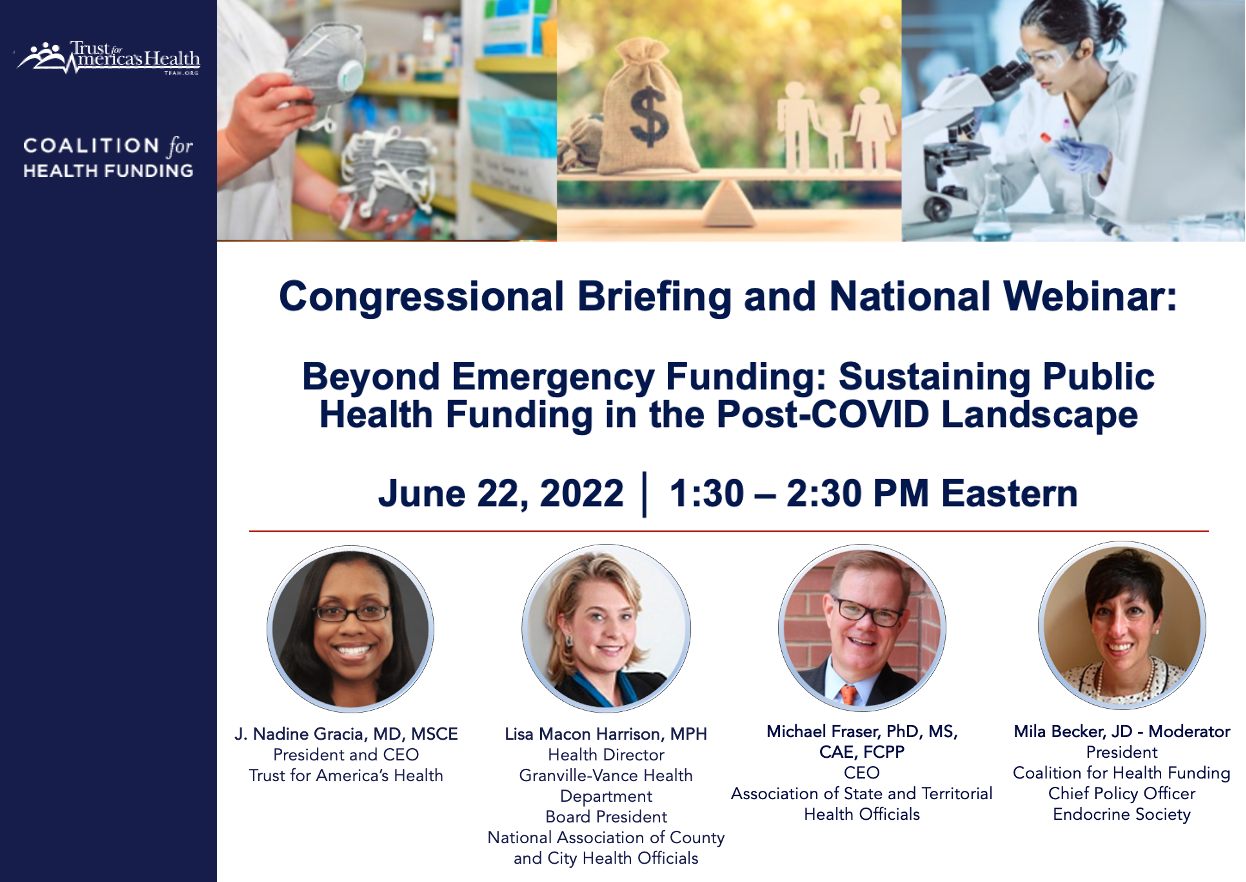
Beyond Emergency Funding: Sustaining Public Health Funding in the Post-COVID Landscape

With Congress having spent billions of dollars fighting COVID-19 since early 2020, why should we increase annual funding for public health when we have so many other competing priorities?

TFAH and the Coalition for Health Funding convened experts in public health policy and funding to clearly explain the need for robust, sustainable public health funding and how it must be considered separately from the COVID-19 emergency.