Vaccines Prevent Infectious Disease Outbreaks and Protect Communities (August 2019)

Infectious diseases disrupt the lives millions of Americans every year.  Fortunately, vaccines can prevent many of these diseases.  Nonetheless, because the U.S. vaccination rates are lower than they should be, unnecessary illness and even death occurs.

For example, the seasonal flu causes much preventable suffering.  The Centers for Disease Control and Prevention (CDC) found an estimated 80,000 people died—among them, 185 children—from seasonal flu in 2017–2018, nearly twice what is considered typical during an average flu year. In addition to the devastating health impacts, it is estimated that seasonal flu costs the nation approximately $87 billion in medical spending and lost work productivity annually.

The U.S. is currently in the midst of its worst measles outbreak in two decades, causing more than 1,000 cases.  With the measles outbreak still growing, it is important to highlight the life-saving impacts of vaccines for people of all ages and take actions to ensure that vaccine use remains a common practice.

Key Findings

  • Vaccines have helped save up to 3 million lives per year worldwide by preventing diseases such as hepatitis B, meningitis, measles and polio. Additionally, researchers say that every dollar spent on vaccination brings back return on investment in health, economic and societal benefits in 94 low to middle income countries.
  • The CDC estimates that vaccination of children born between 1994 and 2018 in the U.S. will prevent 419 million illnesses, help avoid 936,000 deaths, and save nearly $1.9 trillion in total societal costs.
  • In 2018, the CDC reported that the percentage of children under age 2 who had not received any recommended vaccinations quadrupled since 2001.
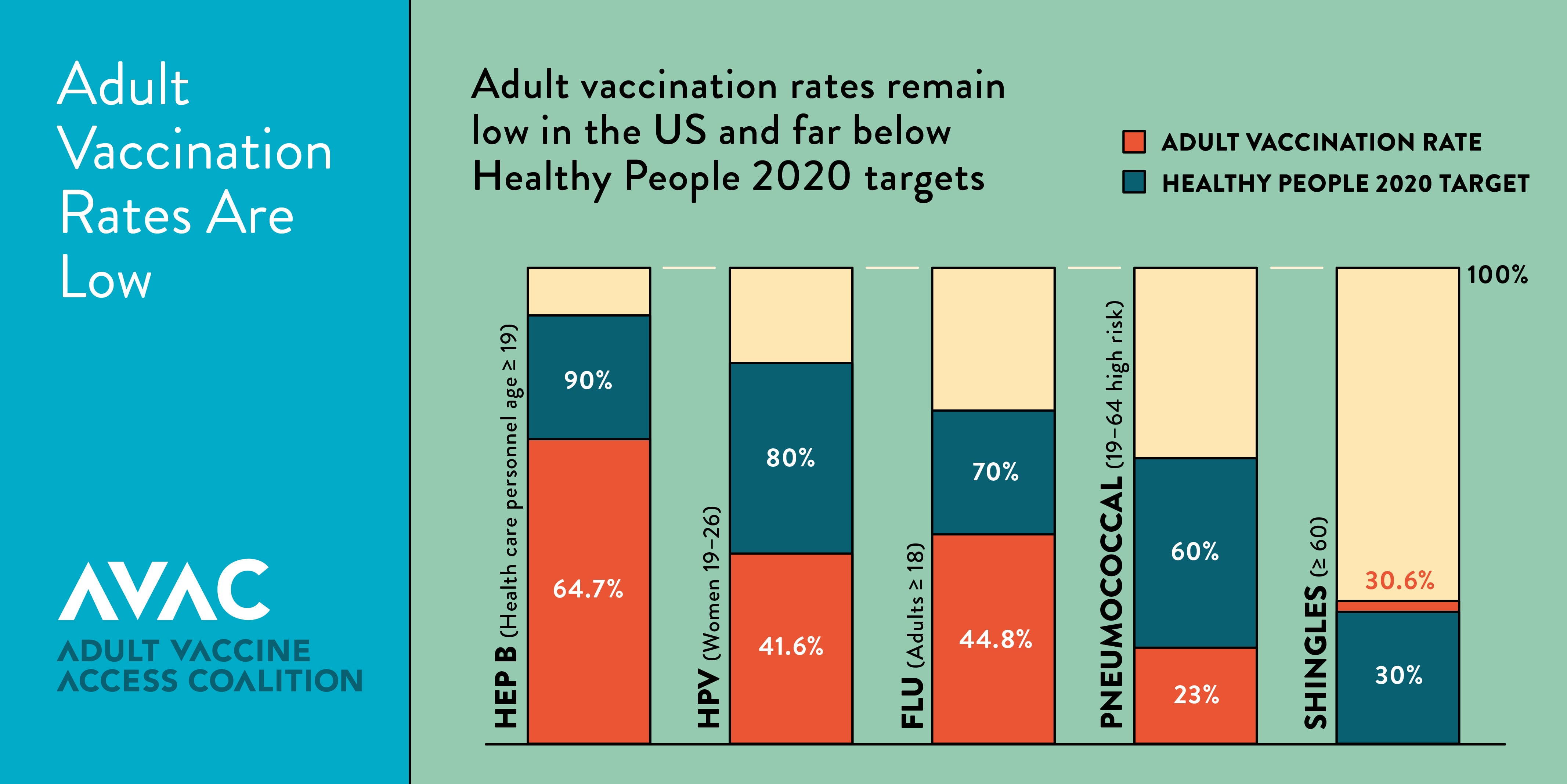
  • Adult vaccination rates remain far below targets in Healthy People 2020, including for hepatitis B, seasonal flu, pneumococcal, and shingles.
  • Seasonal flu vaccination rates for Americans ages 6 months and older dropped from 47 percent in the 2016-2017 season to 42 percent during the 2017-2018 season. The 2017– 2018 flu season in the United States was the deadliest in nearly 40 years—tragically underscoring the importance of annual vaccination.
  • The World Health Organization has named vaccine hesitancy, the reluctance or refusal to vaccinate despite the availability of vaccines, as one of the top ten threats to global health.

Recommendations

  • Significantly increase support for the vaccine infrastructure, outbreak prevention and response. CDC’s immunization program supports state and local immunization programs to increase vaccine rates among uninsured and underinsured adults and children, respond to outbreaks, educate the public and target hard-to-reach populations, improve vaccine confidence, establish partnerships, and improve information systems. Funding has not kept up with needs as states have to spend immunization dollars to respond to outbreaks, increases in the numbers of those who lack health insurance and vaccines, such as HPV, that are underused. Congress should significantly increase funding for CDC’s immunization program.
  • Raise awareness about the importance of vaccination and improve vaccine acceptance. Government, healthcare providers, health systems and other trusted partners should use varied and targeted media channels to educate people about the importance, effectiveness, and safety of vaccinations. Congress should provide needed resources to the United States Department of Health and Human Services to study the causes for vaccine resistance and to educate clinical providers on methods for improving vaccine acceptance.
  • Minimize vaccine exemptions for schoolchildren and healthcare workers. States should enact policies that enable universal childhood vaccinations to ensure children, their classmates, educators and the general public are protected from vaccine-preventable diseases. This includes eliminating non-medical exemptions and opposing legislation to expand exemptions. States should ensure medical vaccine exemptions are only given when appropriate and are not used as a de facto personal belief exemption in states where those exemptions have been eliminated. Healthcare personnel should also be required to receive all recommended vaccinations of the Advisory Committee on Immunization Practices (ACIP) in order to protect staff and patients, assure continuity of operations in the event of an outbreak and, achieve necessary healthcare infection control. Healthcare facilities should ensure access to vaccines for all staff and contractors and remove barriers for staff receiving vaccines.
  • Ensure first-dollar coverage for recommended vaccines under Medicaid, Medicare, and commercial insurance. Public and private payers should ensure that ACIP-recommended vaccines are fully covered, as cost-sharing can be a significant barrier to vaccination.
  • Increase the pool of providers who immunize. As new vaccines are approved, reaching target populations will be critical. States can expand certain health care providers’ roles and scopes of practice to increase the pool of professionals who give shots, such as pharmacists and paramedics.  All insurance plans should consider including pharmacies and other complementary providers as in-network and receive equal payment for vaccine administration services for their adult and pediatric populations.



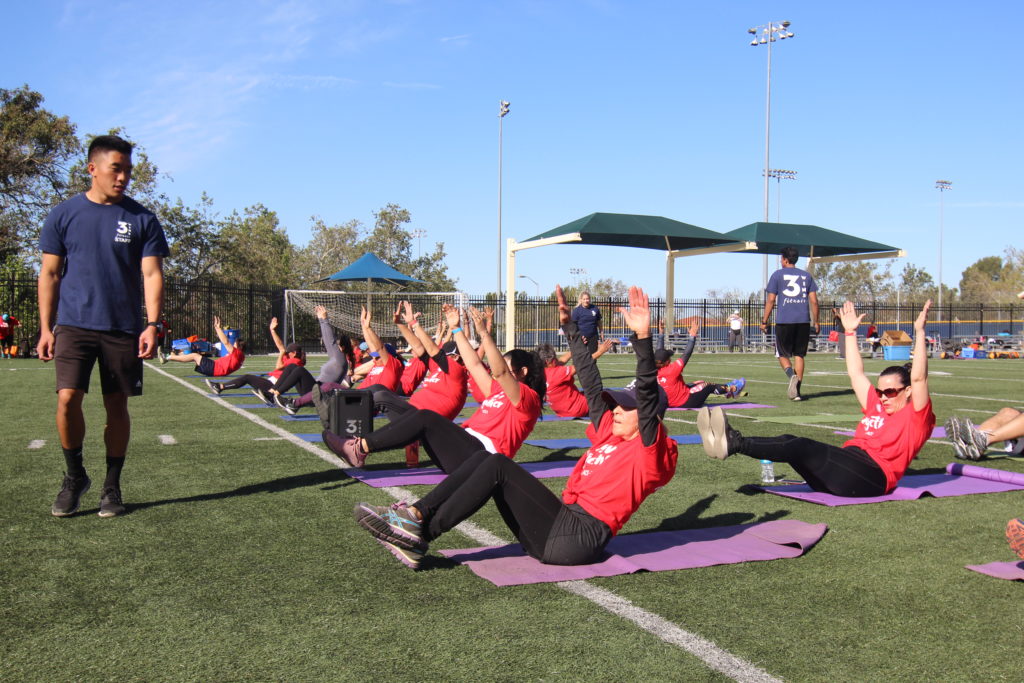
3 WINS Fitness: Free Exercise Classes get Communities Moving

Regular physical activity promotes good health and well-being. Yet, about 80 percent of American adults do not meet the minimum recommended levels for cardiovascular activity and strength training needed to support optimal health and prevent the risk of chronic diseases.

3 WINS Fitness seeks to improve community health by increasing people’s physical activity levels. Launched in 2011 as 100 Citizens by California State University, Northridge’s (CSUN) Department of Kinesiology in partnership with Recreation Park in San Fernando, CA, 3 WINS Fitness offers a tailored and comprehensive free exercise intervention that is sustainable and replicable through its delivery by university kinesiology students. Programs are provided at public parks, faith-based institutions, and public schools, and currently they operate at six sites across Los Angeles County serving over 300 participants.

In 2013 the White House recognized and gave an award to the program through First Lady Michelle Obama’s “Let’s Move!” campaign. Since then, the program has scaled to three other universities within the California State University system.

Their program’s “3 WINS” reflects their social impact priorities: community health, participant fitness, and student professional development.

WIN 1: Community Health

Access and affordability to safe places to engage in physical activity promotes optimal community health. However, many low-income communities do not have affordable access to safe places for physical activity, and thus have a disproportionate burden of disease compared to wealthier communities.

Steven Loy, Ph.D., professor of kinesiology at CSUN and founder/faculty advisor for 3 WINS Fitness says the program focuses on those underserved communities which are at high risk for diabetes, cardiovascular disease, obesity and other chronic diseases related to physical inactivity.

“Having a program in their neighborhood park, school, and church where they can easily walk to and exercise, especially where there are no other physical activity programs is important,” said Loy. “We are holding it in communities that county public health has identified as areas where health inequities exist, and we are helping to address the social determinants of health by improving the physical activity conditions of those communities.”

Loy says through their research with RAND Corporation and the data they have collected, they observed a greater use of park facilities with the introduction of structured physical activity, in particular for the senior population reflecting a sense of safety and community among themselves and their students.

WIN 2: Participant Health

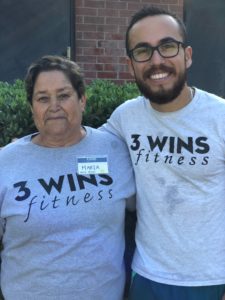
Program Coordinator, Josh Carlos with 3 WINS Fitness participant Maria Ortiz-Rojas.

3 WINS Fitness provides participants with a dynamic 60-minute exercise routine three times per week for adults of all ages and fitness abilities, including a falls prevention group, and free diabetes prevention program modified from the National Diabetes Prevention Program.

Loy noted, “participants who attend the three classes per week exceed the minimum recommended levels for cardiovascular activity and strength training cited in the 2018 Physical Activity Guidelines. Throughout the years, our 3 WINS Fitness participants have had many success stories.”

“Doctors said I would need surgery for a back injury, I was in constant pain, I couldn’t even lift my arms to brush my hair” said 3 WINS participant of two years Balvina Nuño. “Since joining 3 WINS, the injury has healed without surgery. I can now lift my arms over my head, and I have lost 30 pounds! I am thankful to God and the instructors for giving me my life back.”

Other participants of the program have also reported improved health.

“I started 3 WINS Fitness last summer and have lost over 40 pounds,” said Andrea Veronica. “I am diabetic and was required to inject insulin 6 times a day. Because of this program, today I am no longer required to inject myself or take any medication. I am happy and feel more energetic than ever!”

“I started this program in October 2017 as a pre-diabetic,” added Candy Lopez. “I have lost 24 pounds, and I feel happier and have more energy. I love coming here because the participants and instructors create such a strong family-like community that I feel motivated to come workout every time.”

WIN 3: Student Professional Development

The kinesiology students involved in the program include both undergraduate and graduate students trained and educated in exercise and human movement. For them, 3 WINS Fitness is an opportunity to apply their education, gain job-related experience, and grow in leadership skills and self-empowerment.

“Noting the constant changes happening in health care reform, I realized what we are doing through 3 WINS Fitness is so special and is soon, if not already, to become the face of preventative health care methods that is efficient, cost-effective, and helps not only me as a healthcare provider, but most importantly, the individuals in the communities around us attain their best level of health and fitness,” said Angelica Alberto, a former 3 WINS Fitness student volunteer who is now pursuing a Doctor of Physical Therapy and Master of Public Health dual degree at Northwestern University.

Loy says it is also an opportunity to show communities what those educated in kinesiology can do for public health.

“We have found that there are few opportunities created for kinesiology and public health to work together. We are trying to change that with upstream solutions to the ideas promoted by Public Health 3.0,” said Loy. “We have recruited students to create an ongoing army of individuals trained in physical activity who are pursuing additional public health education opportunities, and, are motivated and enthusiastic to deliver programming that reaches the whole community to improve health.”

Where is the Program Going?


3 WINS Fitness participants receive exercise programming from 3 WINS Fitness kinesiology students during a 3 WINS
Fitness Summit held in April 2018.

Throughout 3 WINS Fitness’ journey, partnerships have been critical. The program has teamed with public and private sector partnerships with parks and recreation, public health, universities and research institutions, hospitals, and health and fitness organizations to sustain, scale, and provide accessible physical activity programming to communities.

One of those partners is the American Council on Exercise (ACE). Cedric Bryant, Ph.D., ACE President and Chief Science Officer says “ACE’s partnership with 3 WINS Fitness helps us fulfill our mission to get people moving, regardless of age, gender, race, or socioeconomic background.”

In the spring of 2018, ACE partnered with 3 WIN Fitness to hold a Summit to demonstrate the program to stakeholders. One of the attendees included Loretta DiPietro, Ph.D., professor of exercise and nutrition sciences at the Milken Institute School of Public Health at George Washington University in Washington, D.C. She was also a committee member of the 2018 Physical Activity Guidelines Advisory Committee which reviewed the scientific evidence and prepared a report about physical activity and health for the second edition of the Physical Activity Guidelines for Americans.

She said, “I’ve been waiting my entire public health career to see the science of exercise and physical activity translated and scaled up to the community level so elegantly and effectively. The cultural wave of change in how communities adopt an active lifestyle begins now with 3WINS Fitness!”

According to a study done by the Centers for Disease Control and Prevention, 11.1 percent in total health care expenditures were associated with inadequate levels of physical activity. However, if programs were in place to help adults meet current guidelines for physical activity, the country could avert up to an estimated $117 billion in preventable health care spending.

Loy said 3 WINS Fitness is part of that solution, and their next goal is to scale 3 WINS Fitness through universities across the country by training staff to develop and sustain their own program specific to their community.

“There are over 700 universities with kinesiology programs,” said Loy. “Our experience in replicating our program, as well as scaling it to other universities has identified the challenges existing for collaboration among public health, kinesiology, parks and recreation, and faith-based organizations, but it has also been an 8-year demonstration that an affordable sustainable solution is possible if we work together. The university kinesiology model can drive community wide disease prevention programs which can be customized for the needs of the community.”

*3 WINS Fitness Banner Photo Credit: Carmen Anthony

States Can Improve Residents’ Health and Reduce Healthcare Spending by Adopting Policies Outside of the Healthcare Sector, New Report Shows

February 21, 2019

Policies that can improve health and save money include: Pre-K and school nutrition programs, syringe access, tobacco and alcohol taxes, paid family leave, the Earned Income Tax Credit and rapid rehousing.

(Washington, DC) — States can improve their residents’ health and well-being, and lower healthcare costs, by implementing a range of policies in sectors beyond healthcare, according to a new report, Promoting Health and Cost Control: How States Can Improve Community Health and Well-being through Policy Change, released today by Trust for America’s Health (TFAH).

The new report analyzes state action on 13 policies outside the healthcare sector that have a long-term impact on health and an evidence base showing their effectiveness. They include: tobacco and alcohol taxes, syringe access programs, universal pre-K and rapid rehousing laws, among others. The wide policy lens of the report, which covers numerous sectors, including taxation, employment, education, housing and transportation, underscores the many economic and social factors beyond medical care that influence health.

In the context of the longest decline in life expectancy since World War I, and, insufficient resources dedicated to preventing health problems before they arise, this new report serves as an urgent call to state policymakers to take concrete steps to improve residents’ health. The report was made possible by financial support from the Robert Wood Johnson Foundation and Kaiser Permanente.

“In the current environment, states have an even more vital role to play in promoting the health and well-being of their residents,” said John Auerbach, President and CEO of Trust for America’s Health. “Our goal in creating this report is to provide state public health officials and policymakers the evidence and business case for the adoption of policies that have been shown to improve community health.”

Policies Analyzed in the Report Number of States with the Policy
Universal Pre-K program* 10 (incl. DC)
School breakfast program 31 (incl. DC)
School lunch program 20
School competitive foods (snacks and drinks) 28 (incl. DC)
Syringe access programs 27 (incl. DC)
Smoke-free laws** 29 (incl. DC)
Tobacco taxes*** 51 (incl. DC)
Alcohol taxes*** 51 (incl. DC)
Complete streets 30 (incl. DC)
Housing rehabilitation loan and grant programs**** 40 (incl. DC)
Rapid re-housing laws 9 (incl. DC)
Earned income tax credit 30 (incl. DC)
Paid sick leave 12 (incl. DC)
Paid family leave 7 (incl. DC)
Fair hiring protections (ban the box) 34 (incl. DC)

The economic benefits of these policies can be substantial. For example:

  • Pre-K education programs can generate $4.63 in benefits to participants, taxpayers, and others in society for every $1 spent on such programs.
  • Expanding syringe exchange programs could return $7.58 for every $1 invested in the long run, by lowering HIV rates and reducing treatment costs. There is no evidence such programs lead to higher drug use.
  • Rapid re-housing programs, which focus on getting homeless individuals into stable housing before addressing other challenges, can reduce hospital admissions and jail bookings. One pilot study found that such an approach saved more than $36,000 in treatment costs per person over the course of a year, nearly twice what the program cost.

“While the healthcare sector plays an important role in providing health services when someone gets sick, many of the factors that keep people healthy are outside the healthcare system and involve where people live, work, play and learn,” said Adam Lustig, Manager of the Promoting Health and Cost Control in States initiative and one of the report authors.  “This report gives state policymakers a menu of evidence-based policies that have been shown to improve individual and community health.”

“I encourage all state policymakers to read this important report.  Doing so will give them access to proven solutions to the challenge of run-away healthcare spending yet so little improvement in health outcomes. To improve Americans’ health, we have to think beyond the healthcare sector and about the many factors that impact health,” said Anand Parekh, MD, MPH, Chief Medical Advisor, Bipartisan Policy Center and a member of the Promoting Health and Cost Control in States Advisory Board.

To create the report, TFAH reviewed approximately 1,500 evidence-based programs and strategies.  The 13 policies ultimately included in the report all:

  • Have a strong health impact and economic evidence of that impact, such as cost avoidance or reduction.
  • Focus on prevention at the population health level, i.e., are designed to prevent illness or injury at the community level rather than the individual level.
  • Focus on primary prevention, preventing an injury or illness rather than treating it.
  • Can be implemented by state legislative action.

The findings show dramatic variability in how states approach these health-promoting policies. For instance, all 50 states plus DC institute tobacco and alcohol taxes. But only nine states and DC have laws in place to encourage universal pre-K programs, which have been shown to set children up for better health later in life. Universal pre-K programs are state funded programs that support pre-K for nearly 50 percent or more of the state’s 4-year-olds. Only six states and DC support paid family leave, even though data show such policies support maternal and child health, and, can save employers money in the long run.

“Action is imperative,” said Auerbach.  “As a nation, we spend trillions of dollars a year on healthcare and yet Americans are getting less healthy.  The solution is two-fold: direct more spending to prevention efforts and address the social determinants of health instead of their impact after someone is sick.”

Notes:
*states that support state-funded pre-K to nearly 50% or more of the state’s 4-year-olds.
**comprehensive smoke-free as per the American Lung Association
*** rates vary, and higher taxes are generally more effective
**** many states fund such programs in the absence of statewide legislation

# # #

Trust for America’s Health is a nonprofit, nonpartisan organization that promotes optimal health for every person and community and makes the prevention of illness and injury a national priority.  www.tfah.org

Countering Childhood Obesity in Georgia

Countering Childhood Obesity in Georgia

Georgia Shape, a statewide multifaceted initiative, seeks to advance the health and well-being of children by utilizing a cross-sectors approach to tackle childhood obesity in the state.

By cultivating strong relationships with institutions throughout the State, Georgia Shape has been able to focus on upstream interventions, namely providing time in each students’ day for physical activity. Upstream interventions refer to programs and policies that impact the root causes of health or social conditions.

Through the development of community-wide interventions, particularly Georgia Shapes’ ‘Power Up for 30’ program, rates of childhood obesity in Georgia have started to  decrease. The Center for Disease Control and Prevention recognizes school based programs to increase physical activity, such as ‘Power Up for 30’, as one of fourteen non-clinical community-wide interventions that can lead to cost-effective and cost-saving health outcomes within five years.

How It Took ‘Shape’

After the implementation of the 2009 Georgia Student Health and Physical Education Act (SHAPE), Georgia Shape was created to end the increasing rates of obesity among children in the state. In 2011, the Governor declared childhood obesity prevention as the number one public health priority and state leaders understood the importance of bridging the efforts of multi-sector partners to bolster the goals set forth by SHAPE. A governing council comprised of experts from a variety of disciplines was established to ensure that multiple perspectives were considered. Through the utilization of an obesity systems modelling program, factors contributing to obesity were identified, including a substantial lack of physical activity.

The overall goal of Power Up for 30 is to promote and protect the health of all children by incorporating 30 minutes of physical activity before, during, or after each school day. In collaboration with researchers, the Georgia Department of Public Health developed a comprehensive model to strategically focus and measure the health and economic impacts of school-based programs to increase physical activity.

The Power Up for 30 Model

Implementation of ‘Power Up for 30’ in schools relied on the support and acceptance of school superintendents and educators. Georgia Shape was promoted throughout elementary schools with messaging tailored to the interests of teachers and administrators to help garner support and establish applicability for the intervention. Tailored messages emphasized the benefits school principals, physical education teachers, and classroom teachers each prioritized including improved attendance and discipline, improved health, and improved academic performance. By identifying perceived barriers in each school, program developers were able to mold ‘Power Up For 30’ to fit each school’s specific environment and/or needs and assist teachers and administrators in achieving their respective goals.

School Based Activity Programs Increase School Based Activity Programs Decrease
●     School attendance

●     Academic performance

●     Concentration and attention in the classroom

●     Scores on State competency tests

●     Physically activity in the classroom

●     Childhood Obesity

●     Number of students receiving discipline

●     Negative health outcomes

Shape encouraged the utilization of physically active academic lessons as both a supplement to physical education in schools and to complement student learning. Former teachers served as subject matter experts to ensure the design of the program incorporated the realities of what would work in the classroom. Furthermore, the former teachers lent their knowledge of the unique needs of specific communities, which helped increase the programs ability to fit the diverse norms of different school environments.

In order to measure the effects of the intervention, the program assessed health knowledge, classroom physical activity time, time spent doing moderate to vigorous activity during physical education, availability of before school activity programs, and student aerobic capacity and BMI. For each school, data was compiled to discern the best available strategies for increasing physical activity within their individual environments. Buy-in and engagement was created at the individual school levels by training at least one administrator, one physical education teacher, and one classroom teacher to lead the ‘Power Up for 30’ program in their respective schools. Cultivating within-the-school leaders for the Power Up 30 program was a key to its success.

Success and Sustainability

At the beginning of 2012 the Power Up for 30 program launched across 40 Georgia elementary schools. ‘Power Up for 30’ expanded from a 5-county pilot program to a statewide approach by the 2013-2014 school year. As of 2016, more than 880 schools enlisted in Power Up for 30. Initially an elementary school pilot, ‘Power Up for 30’ is now embedded into Georgia’s elementary school educational curriculum and augmented to incorporate a middle school pilot.

Georgia Shape’s success in large part is due to its more than 120 partnerships and its sustainable and adaptable practices. Through utilizing evidence-based and sustainable models such as online training modules, low or no cost resources, free training, and continuous technical support, the Power Up for 30 program supports the implementation needs of all schools and educators. Assistance from public and private sector partners, such as the Georgia Department of Education, Department of Child and Family Services, the CDC, and corporate sponsors have been vital to Georgia Shapes’ achievements in tackling childhood obesity and protecting the health of every child.

For more information visit:

http://georgiashape.org/

(December 2018)

The State of Obesity 2018

«state_headline»

Report emphasizes urgent need to increase evidence-based obesity prevention programs to prevent disease and potentially save billions in healthcare spending

«lead_graph»

Findings include:

  • Adult obesity rates vary considerably from state to state, with a high of 38.1 percent in West Virginia and a low of 22.6 percent in Colorado. No state had a statistically significant improvement in its obesity rate over the past year.
  • Adult obesity rates are at or above 35 percent in seven states; for the first time in Iowa and Oklahoma, and at least the second time in Alabama, Arkansas, Louisiana, Mississippi, and West Virginia.
  • Six states — Iowa, Massachusetts, Ohio, Oklahoma, Rhode Island, and South Carolina — saw their adult obesity rates increase significantly between 2016 and 2017.
  • Adult obesity rates are between 30 and 35 percent in 22 states and 19 states have adult obesity rates between 25 and 30 percent.
  • Over the past five years (2012 – 2017), 31 states had statistically significant increases in their obesity rate and no state had a statistically significant decrease in its obesity rate.
  • There continue to be striking racial and ethnic disparities in obesity rates. In 31 states, the adult obesity rate among Blacks is at or above 35 percent.  Latino adults have obesity at a rate at or above 35 percent in eight states.  White adults have obesity rates at or above 35 percent in one state. Nationally, the adult obesity rates for Latinos, Blacks and Whites are 47.0 percent, 46.8 percent and 37.9 percent respectively.

State by State rates of obesity among adults: 1 = highest rate of obesity, 51 = lowest rate

  1. West Virginia (38.1%), 2. Mississippi (37.3%), 3. Oklahoma (36.5%), 4. Iowa (36.4%), 5. Alabama (36.3%), 6. Louisiana (36.2%), 7. Arkansas (35.0%), 8. Kentucky (34.3%), 9. Alaska (34.2 %), 10. South Carolina (34.1%), 11. Ohio (33.8%), 12. Indiana (33.6%), 13. North Dakota (33.2%), 14. Texas (33.0%), 15. Tie Tennessee and Nebraska (32.8%), 17. Missouri (32.5%), 18. Kansas (32.4%), 19. Michigan (32.3%), 20. North Carolina (32.1%), 21. Wisconsin (32.0%), 22. South Dakota (31.9%), 23. Delaware (31.8%), 24. Tie Pennsylvania and Georgia (31.6%), 26. Maryland (31.3%), 27. Illinois (31.1%), 28. Virginia (30.1%), 29. Rhode Island (30.0%), 30. Arizona (29.5%), 31. Oregon (29.4%), 32. Idaho (29.3%), 33. Maine (29.1%), 34. Wyoming (28.8%), 35. Tie Minnesota, Florida and New Mexico (28.4%), 38. New Hampshire (28.1%), 39. Washington (27.7%), 40. Vermont (27.6%), 41. New Jersey (27.3%), 42. Connecticut (26.9%), 43. Nevada (26.7%), 44. Massachusetts (25.9%), 45. New York (25.7%), 46. Tie Montana and Utah (25.3%), 48. California (25.1%), 49. Hawaii (23.8 %), 50. District of Columbia (23.0%), 51. Colorado (22.6 %).

NOTE to reporters: See full report at TFAH.org/ObesityReport2018 and StateofObesity.org for state-by-state obesity rates, data interactives, priority policy summaries, and briefs for all 50 states.

“Obesity is a complex and often intractable problem and America’s obesity epidemic continues to have serious health and cost consequences for individuals, their families and our nation,” said John Auerbach, president and CEO of Trust for America’s Health. “The good news is that there is growing evidence that certain prevention programs can reverse these trends.  But we won’t see meaningful declines in state and national obesity rates until they are implemented throughout the nation and receive sustained support.”

Obesity is a problem in virtually every city and town, and every income and social sector.  But its impact is most serious in communities where conditions make access to healthy foods and regular physical activity more difficult, such as lower income and rural areas, including many communities of color.

The national costs of obesity are enormous.  Obesity drives an estimated $149 billion annually in directly related healthcare spending, and an additional $66 billion annually in lowered economic productivity. Also, one in three young adults is ineligible for military service, owing to being overweight, posing a national security vulnerability.

Evidence-based programs, policies and practices to reverse the obesity trend are known but need widespread implementation.

“Obesity is a major challenge in nearly every state and our role as public health leaders is to ensure we’re doing everything we can to address it,” said John Wiesman, president of the Association of State and Territorial Health Officials (ASTHO) and secretary of health at the Washington State Department of Health. “Our goal at the state level is to work across sectors to advocate for and implement evidence-based policies that encourage active healthy living and support healthy and safe communities that provide access to healthy foods, physical activity, and clinical preventive services.”

Recommendations

The report offers 40 recommendations for federal, state and local policymakers; the restaurant and food industries; and the healthcare system, including:

  • Support and expand policies and programs aimed at addressing obesity at the federal, state and community levels, including programs in the Centers for Disease Control and Prevention’s (CDC) Division of Nutrition, Physical Activity and Obesity, and community health programs like the Racial and Ethnic Approaches for Community Health program (REACH), and programs that focus on school health in CDC’s Division of Population Health.
  • Maintain and strengthen essential nutrition supports for low-income children, families and individuals through programs — like the Supplemental Nutrition Assistance Program (SNAP) and the Special Supplemental Nutrition Program for Women, Infants and Children (WIC) in the U.S. Department of Agriculture (USDA) and expand programs and pilots to make healthy food more available and affordable through the program.
  • Maintain nutrition standards for school meals that were in effect prior to USDA’s interim final rule from November 2017, as well as current nutrition standards for school snacks.
  • States should ensure that all students receive at least 60 minutes of physical education or activity during each school day.
  • Medicare should encourage eligible beneficiaries to enroll in obesity counseling as a covered benefit, and, evaluate its use and effectiveness. Health plans, medical schools, continuing medical education, and public health departments should raise awareness about the need and availability of these services.
  • Food and beverage companies should eliminate children’s exposure to advertising and marketing of unhealthy products.
  • Hospitals should no longer sell or serve sugary drinks on their campuses; they should also improve the nutritional quality of meals and promote breastfeeding.

# # # 

Trust for America’s Health is a nonprofit, nonpartisan organization that promotes optimal health for every person and community and makes the prevention of illness and injury a national priority.  www.tfah.org